


Uncategorized
Stone Polishing Machine: Types, Applications, Process, and Selection Guide
Sep
Achieving a consistent stone finish depends on more than just the polishing stage. The type of stone, the initial surface condition, the sequence of abrasives used, machine configuration, tooling, water management, and the desired finish all influence the final result. For fabricators, choosing the right stone polishing machine means considering the entire processing workflow rather than just the polishing head itself.
Different workpieces also require different approaches. A large granite slab may require a continuous polishing line, while a tombstone, column, cylindrical workpiece, or irregularly shaped stone may require a more flexible machine configuration.
This guide explains the process of stone polishing, the main types of polishing machines, suitable stone materials, abrasive selection, common applications, and the factors to consider when selecting equipment.
What Is a Stone Polishing Machine?
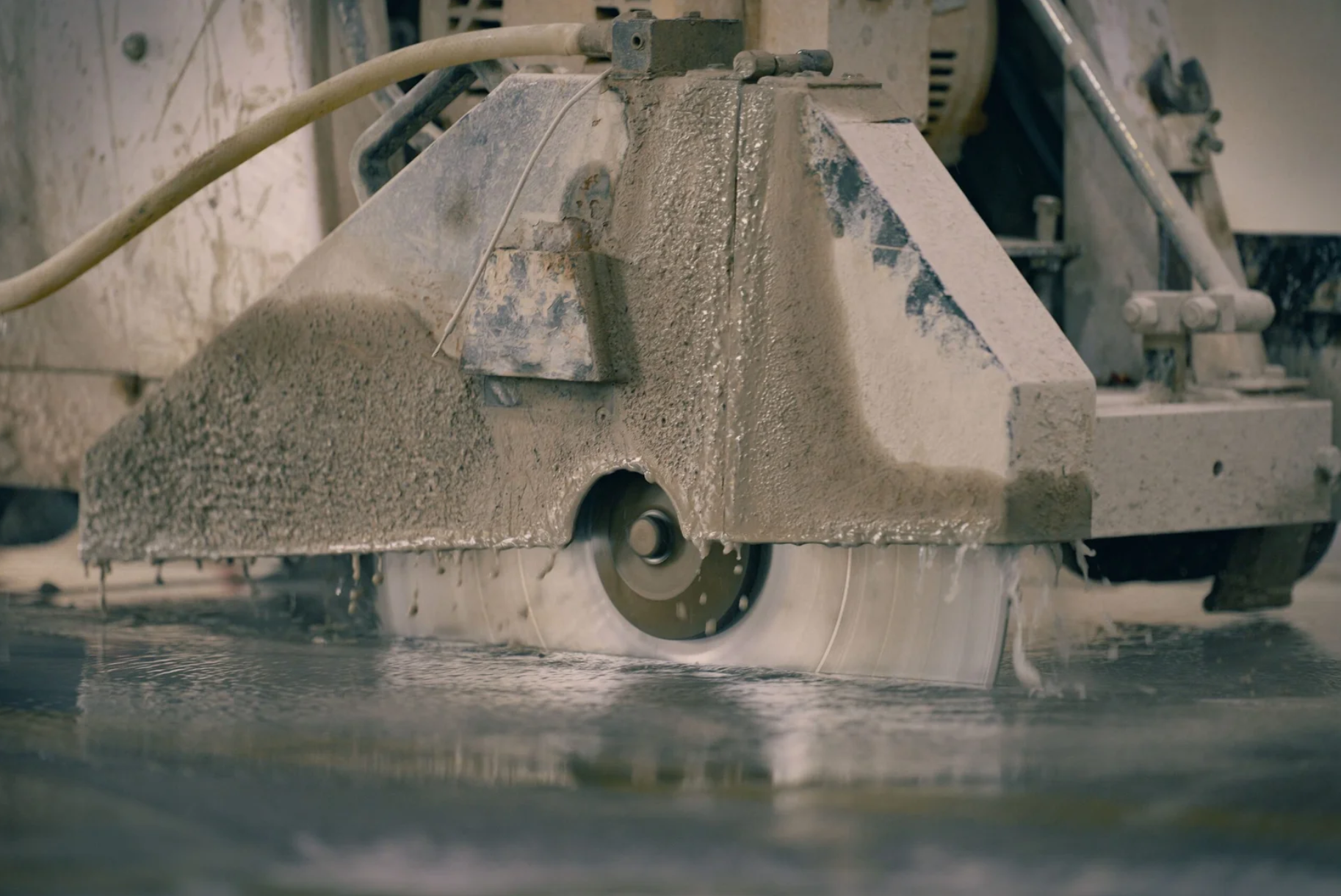
A stone polishing machine is a piece of equipment designed to refine and finish the surface of natural or engineered stone through controlled abrasive processing.
Depending on the machine configuration, the process may include grinding, honing, and final polishing. These stages gradually remove surface irregularities and scratches while producing the desired surface finish.
The terminology used in stone processing can vary depending on the application and region. The Natural Stone Institute’s Glossary of Stone Industry Terms provides industry terminology covering a wide range of stone fabrication and finishing terms.
In actual production, polishing should not be viewed as an isolated process. The final finish depends heavily on the steps that take place before the polishing stage.
How Does a Stone Polishing Machine Work?
A typical stone polishing process progresses from heavier material removal to increasingly fine surface refinement.
Surface Preparation
Before polishing begins, the stone surface must be prepared properly.
Saw marks, uneven areas, tool marks, resin treatment, surface variations, and other imperfections can affect the subsequent polishing stages. If the starting surface is inconsistent, the polishing process may result in uneven gloss or visible defects.
For this reason, surface preparation often determines how efficiently the subsequent grinding and polishing stages can be carried out.
Grinding
Grinding removes more material than the subsequent finishing stages. It can level the surface, reduce saw marks, and remove deeper irregularities.
The abrasive used at this stage is generally coarser than those used for honing or polishing. The exact sequence of abrasives depends on the stone material, the initial surface condition, the equipment, and the desired finish.
For manufacturers that work with different types of stone, equipment flexibility is key. CANON Machinery offers stone grinding and polishing machines for applications where surface preparation and finishing must work together as part of a complete process.
Fine Grinding and Honing
After the major surface irregularities have been removed, finer abrasives smooth out the scratches left by the previous step.
Honing generally produces a smoother, more uniform surface without the high reflectivity associated with a polished finish. This step can also prepare the stone for the final polishing operation.
The transition from grinding to honing should be carefully controlled rather than treated as a simple change of abrasive. Each stage must remove the surface marks created by the previous stage.
Final Polishing
Final polishing uses finer abrasive tools to further refine the stone's surface and achieve the desired appearance.
For polished stone, the goal is typically a smooth, reflective surface. However, the exact finish depends on the stone itself, the tools used, the sequence of abrasives, machine stability, and processing conditions.
A polishing machine must therefore maintain consistent contact between the abrasive and the workpiece while allowing the operator or control system to manage the processing sequence.
Types of Stone Polishing Machines
Stone polishing machines can be categorized based on their level of automation, flexibility, and processing configuration.
Manual Stone Polishing Machines
Manual machines give operators greater control over individual workpieces. They can be useful for smaller production runs, custom work, repairs, and applications where the dimensions or shapes of the stone vary frequently.
Their flexibility can be useful when a standardized automated production line would not be practical.
However, the results depend more heavily on the operator's technique and consistent process control.
Semi-Automatic Stone Polishing Machines
Semi-automatic equipment combines mechanical processing with operator intervention.
These machines can provide more consistent movement and pressure control than fully manual processing, while still allowing operators to adjust the process for different materials or workpiece conditions.
They may be suitable for fabricators who need greater repeatability without committing to a fully automated production line.
Automatic Stone Polishing Machines
Automatic machines reduce the need for manual intervention and can ensure more consistent processing of repeated workpieces.
They are particularly useful when production involves standardized stone dimensions, repeatable surface requirements, or continuous slab processing.
Automation can also help integrate polishing with other production stages, material handling, drying, or quality control procedures.
A Stone World fabrication case study describes an automated granite slab process in which slabs move through preparation, treatment, drying, and polishing stages as part of an integrated production workflow. The example illustrates how polishing can be one stage within a larger automated fabrication system. Read the Stone World fabrication case study on automated granite slab enhancement.
CNC Stone Polishing Machines
CNC equipment uses programmed movements to machine workpieces with more complex geometries.
This configuration can be useful for shaped stone components, architectural elements, custom profiles, and other applications where tool movement must follow defined geometries.
The advantage is not merely automation. CNC control can also make the repeatable machining of complex shapes more practical.
Multi-Head Stone Polishing Machines
Multi-head machines use multiple processing heads to work progressively across the stone surface.
This configuration is common in continuous slab processing and other applications where several abrasive stages must be completed in sequence.
The number and arrangement of heads should be determined based on the intended process, rather than being selected independently of the stone material and the required finish.
What Types of Stone Can a Stone Polishing Machine Process?
The appropriate polishing process varies significantly depending on the type of stone.
Granite
Granite is hard and abrasive, so it typically requires a controlled grinding and polishing process.
The initial condition of the slab is also important. Saw marks, surface irregularities, resin treatment, and natural variations in minerals can all affect the choice of abrasive and the polishing process.
Marble
Marble is generally softer than granite and may react differently to abrasive processing.
Excessive material removal is not always necessary, so the process should focus on controlled surface refinement and scratch removal. The required finish also influences the final abrasive stages.
Quartzite
Natural quartzite should not simply be regarded as another form of quartz.
Due to its mineral composition and hardness, grinding and polishing this material can be more challenging than with some other stone materials. Tool selection and process conditions should therefore be tailored to the specific material rather than following a generic stone-polishing sequence.
Engineered Quartz and Sintered Materials
Engineered quartz and sintered materials are manufactured products with compositions and surface structures that differ from those of natural stone.
Their machining behavior can vary depending on the product and manufacturer. Abrasive compatibility, tooling recommendations, cooling requirements, and the desired finish should be considered before establishing a production sequence.
For these materials, following the material supplier’s processing guidelines can help prevent unnecessary tool wear or surface defects.
Applications of Stone Polishing Machines
A stone polishing machine can be used in several areas of stone fabrication.
Stone Slabs
Slab processing is one of the most common applications.
The process may include surface grinding, honing, polishing, buffing, drying, and inspection. Continuous production lines are often designed to accommodate the dimensions and production requirements of the slabs being processed.
Tombstones and Monuments
Tombstones and monuments may require grinding and polishing on flat surfaces as well as on shaped or decorative sections.
The required machine configuration depends on the workpiece dimensions, geometry, finish, and production volume.
Cylindrical Stone
Cylindrical stone components require a different processing method than flat slabs.
The machine must maintain proper contact with the curved surface while controlling the movement of the abrasive and ensuring consistent finishing.
Columns
Stone columns may feature cylindrical, tapered, or decorative shapes.
In these applications, profiling and surface finishing often need to be performed in tandem. The geometry should be established before the final polishing stages.
Prisms and Stone Lines
Prismatic components and stone lines may require controlled shaping, followed by grinding and finishing.
The required process depends on the cross-section, dimensions, material, and final surface specifications.
Special-Shaped Stone
Special-shaped stone products can include custom architectural components, decorative elements, and irregular shapes.
These applications often benefit from flexible or CNC-controlled equipment because the workpiece geometry cannot be treated like a standard flat slab.
Grinding vs. Honing vs. Polishing
Although these terms are sometimes used interchangeably, they describe different stages of surface finishing.
Process | Main Purpose | Typical Result
Grinding: Removes material, saw marks, and deeper irregularities; prepares and levels the surface
Honing: Removes scratches and surface roughness; produces a smooth matte or satin finish
Polishing: Further refine the surface to achieve a glossy or reflective finish
The stages are interconnected. A polishing operation cannot always make up for poor grinding or incomplete honing.
If deeper scratches remain after grinding, moving directly to a very fine polishing stage may waste abrasive material and increase processing time without producing a consistent finish.
Abrasives Used for Stone Polishing
Abrasives play a central role in the stone finishing process.
Common abrasive systems may include diamond tools, abrasive blocks, polishing pads, and other finishing compounds or tools designed for specific materials.
The choice of abrasive depends on:
Stone Type
Stone Hardness
Initial surface condition
Required Finish
Machine Configuration
Tool Compatibility
Production Requirements
There is no single universal grit sequence that works for every stone and machine.
Instead, a fabricator should establish a sequence of abrasives that allows each stage to remove the marks left by the previous stage.
Why Abrasive Progression Matters
Abrasive progression is one of the most important aspects of consistent stone polishing.
A typical process progresses from relatively aggressive material removal to progressively finer surface refinement.
For example:
Surface preparation → coarse grinding → finer grinding → honing → polishing → final inspection
The exact sequence may vary depending on the material and finish.
If an abrasive stage is too aggressive, it may cause unnecessary scratches that require additional processing. If the abrasive is too fine for the starting surface, it may not remove the existing scratches effectively.
The goal is not simply to use more abrasive stages. It is to create a logical progression in which each stage prepares the surface for the next one.
The Role of Water in Stone Polishing
Water plays an important role in many stone grinding and polishing processes.
It can help control the heat generated during abrasive contact, aid in lubrication, and remove stone slurry from the work area.
Poor water management can affect the consistency of the polishing process. Excessive slurry buildup may interfere with abrasive contact, while inadequate cooling can affect tooling and surface conditions.
For production equipment, water supply, drainage, slurry removal, and machine cleanliness should therefore be considered part of the processing system.
Factors That Affect Polishing Quality
A consistent, polished finish depends on several factors working together.
Stone Material
Different stones have varying hardness, mineral composition, porosity, and surface properties.
The same abrasive progression may therefore produce different results on granite, marble, quartzite, and engineered materials.
Initial Surface Condition
A surface with deeper saw marks or uneven areas requires more preparation before final polishing.
Starting with a more consistent surface can reduce the workload in later stages.
Abrasive Selection
The abrasive must be compatible with the material and the processing stage.
Using an unsuitable abrasive can result in slow material removal, excessive tool wear, scratches, or inconsistent gloss.
Machine Stability
Consistent mechanical movement helps maintain uniform abrasive contact.
Machine rigidity, head movement, workpiece support, and process control can all affect surface consistency.
Tool Condition
Abrasives gradually wear down during production.
A worn tool may alter cutting performance and affect surface finish. Regular inspection and timely replacement help ensure a more stable process.
Water and Slurry Management
Cooling and slurry removal affect both tooling and surface quality.
Water flow should be tailored to the equipment and process rather than treated as a secondary consideration.
How to Choose a Stone Polishing Machine
When choosing a stone polishing machine, you should start by considering the workpiece and production process rather than focusing solely on the machine's name.
1. Identify the Stone Materials
List the materials that will be processed.
If the factory processes several types of stone, consider whether the equipment can accommodate different abrasive systems and processing conditions.
2. Define the Workpiece Geometry
Flat slabs, tombstones, cylindrical stones, columns, and special-shaped components may require very different machine configurations.
Geometry should therefore be one of the primary selection criteria.
3. Define the Required Finish
Determine whether the product requires:
Floor finish
Honed finish
Satin finish
Polished finish
High-reflectivity finish
A combination of surface finishes
The desired result affects the abrasive progression and machine configuration.
4. Consider Production Volume
Manual equipment may be the best choice for variable, low-volume work, while automated systems may be more suitable for repetitive production.
The key is to tailor the level of automation to the actual workflow.
5. Evaluate the Entire Process
A polishing machine should not be evaluated in isolation from grinding, profiling, handling, drying, water management, and inspection.
For shaped stone products, profiling may need to be performed before grinding and polishing. CANON Machinery also offers stone profiling machines for applications where shaping and surface finishing are integrated.
6. Consider Maintenance and Serviceability
A machine should be practical to operate and maintain.
Important considerations include access to working components, abrasive replacement, water management, routine cleaning, machine adjustment, and the availability of technical support.
Common Problems with Stone Polishing
Several problems can arise when the processing sequence or machine conditions are not properly aligned.
Uneven Scratches
Uneven scratches may result from incomplete processing in the previous stage, inconsistent abrasive contact, an unsuitable sequence of abrasives, or worn tooling.
The solution is usually to identify which stage caused the problem, rather than simply increasing the final polishing time.
Uneven Gloss
Variations in gloss across the same surface can result from inconsistent material conditions, tool wear, machine movement, water management, or inadequate processing at earlier stages.
Dull Finish
A dull surface may indicate that the final abrasive stage is not properly suited to the stone or that previous scratches remain.
Surface cleanliness and the condition of the tools should also be checked.
Excessive Tool Wear
Rapid tool wear may occur when the abrasive is not suitable for the material, when machining conditions are unsuitable, or when the tool is machining a surface that is unnecessarily difficult to machine.
Stone Polishing vs. Stone Profiling
Stone polishing and stone profiling address different issues.
Profiling focuses on creating or refining the geometry of the stone.
Grinding focuses on removing material and preparing the surface.
Polishing focuses on refining the surface appearance.
A shaped stone product may therefore follow a sequence such as:
Profiling → Grinding → Honing → Polishing → Inspection
For a flat slab, the workflow may be much simpler:
Grinding → Honing → Polishing → Inspection
The exact sequence depends on the product's geometry and finish requirements.
Typical Stone Processing Workflow
Typical Processing Approach for Workpieces
Stone Slabs: Grinding → Honing → Polishing
Tombstone Shaping → Grinding → Polishing
Cylindrical Stone: Profiling → Grinding → Polishing
Column Shaping → Profiling → Polishing
Prismatic Stone Profiling → Finishing
Stone Production Line: Shaping → Grinding → Finishing
Special-shaped Stone Profiling → Surface Finishing
These are general process relationships rather than fixed production recipes. The actual abrasive sequences and machine configurations should be adjusted based on the stone material, workpiece geometry, and required finish.
How to Build a Consistent Stone Polishing Workflow
A consistent process begins with the stone, not the machine.
First, inspect the incoming material and assess its surface condition. Determine whether the stone has deep saw marks, uneven areas, resin treatment, or other characteristics that could affect the grinding process.
Next, determine the desired final finish and work backward through the abrasive stages.
Each stage should remove the surface marks created by the previous stage. Avoid using a very fine abrasive until the surface has been adequately prepared.
Tool condition should also be monitored throughout production. A polishing process can become inconsistent when worn abrasives remain in use for too long.
Water and slurry management should remain consistent throughout the production process. Changes in cooling or slurry removal can affect both tool performance and surface quality.
Finally, inspect the stone between major processing stages. Scratches, unevenness, or other defects detected early are easier to correct than those discovered after final polishing.
Final Thoughts
A stone polishing machine is just one component of a complete stone processing system.
The final surface depends on the interplay between the stone material, the initial surface condition, grinding, abrasive wear, polishing, machine configuration, tooling, water management, and final inspection.
For manufacturers, the most effective approach is to first define the entire workflow and then select equipment based on that workflow. Flat slabs, tombstones, columns, cylindrical stone, and specially shaped products may all require different combinations of profiling, grinding, honing, and polishing.
A well-matched process can make surface finishing more consistent and easier to control, while ensuring that the equipment meets the actual production requirements of the stone fabrication operation.
